
Format of Balance Sheet explained with pdf

Businesses often use factoring or securitization to accelerate cash inflows, though these methods may involve fees and impact financial ratios. The order of liquidity for assets on a balance sheet is the order in which assets are listed from the most liquid asset to the least liquid asset. Cash liquidity is a measure of a company’s ability to generate cash from its operations and accounts receivable. Non-current assets, such as fixed assets and intangible assets, are listed separately and are not considered liquid. Marketable recording transactions securities, such as stocks and bonds, are also highly liquid and can be converted into cash in a few days.
- Assets are listed on the balance sheet in descending order of liquidity, beginning with those that can be quickly converted into cash and ending with long-term holdings that support business operations over extended periods.
- Order of liquidity is the order in which a company must liquidate its assets in order to meet its obligations.
- This term refers to the sequence in which assets and liabilities of a company are placed on a balance sheet, from the most liquid to the least.
- Knowing how cash and liquidity differ helps you interpret financial information with more context and accuracy.
- The chosen method affects cost of goods sold (COGS), taxable income, and profitability metrics.
- Whether you are starting your first company or you are a dedicated entrepreneur diving into a new venture, Bizfluent is here to equip you with the tactics, tools and information to establish and run your ventures.
Where current assets are located on the balance sheet
A technology firm, for instance, may have a higher proportion of intangible assets like software and patents, while a manufacturing company will likely hold significant property, plant, and equipment. The asset mix influences financial ratios such as return on assets (ROA) and asset turnover, which investors use to assess efficiency. A firm with substantial fixed assets but low revenue generation may indicate capital misallocation, whereas a company with a high proportion of receivables might face collection risks. Assets are listed on the balance sheet in descending order of liquidity, beginning with those that can be quickly converted into cash and ending with long-term holdings that support business operations over extended periods.

License Content Availability
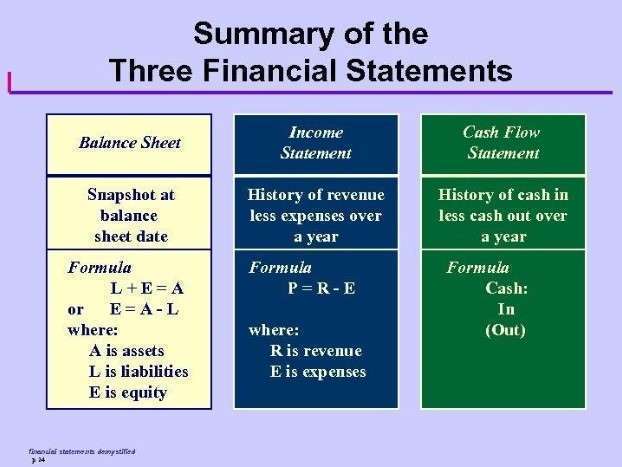
When companies lack adequate cash, they often raise capital, meaning they obtain funding by borrowing (debt) or issuing shares (equity). These financing methods give the company the cash it needs to move forward with those investments. In finance and accounting, cash refers to money (currency) that is readily available for a company to use. It may be kept in physical form or digital form held in a company’s cash banking accounts.
Example of Order of Liquidity in Current Assets
- Generally, it is not recommended to exclude such assets from a personal investment portfolio.
- Using the order of liquidity to present the current assets has many benefits, not only for the readers of financial statements but for management of the company as well.
- Current assets are expected to be consumed, sold, or converted into cash either in one year or in the operating cycle, whichever is longer.
- On a company’s balance sheet, current assets usually appear at the top of the asset section, listed in order of liquidity with cash first and less liquid items like inventories last.
- A low turnover ratio may signal overstocking or slow-moving goods, tying up capital and increasing holding costs.
- Cash is the most liquid asset, as it can be easily converted into cash without any significant loss of value.
IFRS 9 requires expected credit loss (ECL) modeling, which mandates forward-looking impairment assessments. It is a list of a company’s assets showing how quickly they can convert those assets to cash. Accounts payable is a less liquid asset, as it represents money owed by the business to its suppliers, which may take time to pay off. Accounts receivable is the next most liquid asset, as it order of liquidity balance sheet represents money owed to the business by customers.
- Accounts receivable, which is the money owed to the business by customers, is generally listed next.
- Those assets that convert quickly into cash, usually within one year of the balance sheet’s creation, are called current assets.
- Assets that are not expected to convert into cash within a year, such as Property, Plant & Equipment (PP&E), are categorized as non-current assets and listed further down in the balance sheet.
- The choice of standards or principles is usually a function of the jurisdiction in which a business entity and the users of its financial statements are domiciled.
For example, a finance student might focus only on how much cash a company has, without considering other current assets. This article breaks down cash vs. liquidity to explain the differences, show where each appears in financial statements, and how to use the right term in the right context. This term refers to the sequence in which assets and liabilities of a company are placed on a balance sheet, from the most liquid to the least.

3 Presentation of assets and liabilities
For reporting the financial health of a business, few reports are as essential as the balance sheet. Since balance sheets are often used to assess how a company operates compared with others or with its own past periods, accountants prepare balance sheets using generally accepted procedures. Business assets are usually reported by account classifications in order of liquidity, beginning with cash. One way to measure a firm’s ability to meet its short-term obligations with its liquid assets.
Companies that maintain their assets in an order of liquidity can quickly discern which assets can be tapped at short notice to cover immediate financial needs. For instance, within a balance sheet assets are usually organized in order of liquidity. The finance term “Order of Liquidity” is important because it provides an overview of a company’s financial stability and efficiency.

#6 – Non-trade Receivables
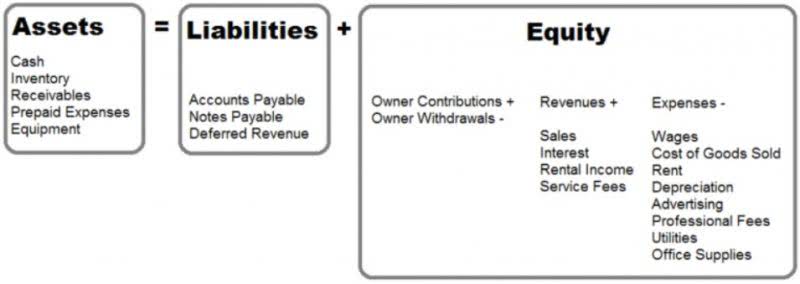
This gives assets priority when being classified on a balance sheet, since converting assets to cash may be a priority with lenders or potential buyers. The ability to convert assets to cash is called liquidity and it’s measured roughly in units of time. Those assets that convert quickly into cash, usually within one year of the balance sheet’s creation, are called current assets. Which are liquid assets you can convert into cash immediately at the current assets of the market price, through marketable securities. In personal finance, individuals can also use the order of liquidity when listing their Medical Billing Process assets and liabilities. Current accounts or savings that can be easily accessed and turned into cash will be on the top, followed by more liquid investments like stocks or bonds.


